snoring
13 Proven Ways to Stop Snoring Tonight (2026 Guide)
Evidence-based ways to stop snoring: sleep position, weight, alcohol, allergies and anti-snoring aids that actually work. Written with a doctor-reviewed approach.
On this page
- Why we snore
- Free changes to try first
- 1. Sleep on your side
- 2. Lose a little weight (if relevant)
- 3. Avoid alcohol in the evening
- 4. Treat nasal congestion
- 5. Stick to a regular sleep schedule
- 6. Stay hydrated
- Medical & over-the-counter aids
- 7. Anti-snoring mouthpieces / mandibular advancement devices (MADs)
- 8. Nasal strips and nasal dilators
- 9. Chin straps - the honest verdict
- 10. Positional sleep aids
- 11. Continuous Positive Airway Pressure (CPAP)
- When to see a professional
- Summary: your quick action plan
- Sources
Snoring affects roughly half of all adults at some point, and it’s more than just a nuisance for your partner - it can be a sign of a genuine health issue. The good news: for many people, simple lifestyle changes make a real difference. This guide looks at the evidence behind the most common snoring remedies, from free changes you can make tonight to medical advice worth seeking.
Before you start: if your snoring is loud, gasping, or your partner reports pauses in your breathing at night, you could have obstructive sleep apnoea (OSA). That’s a medical condition, not a bad habit - see a GP or a sleep specialist. The tips below are for simple, non-medical snoring.
Why we snore
Snoring happens when air flows past relaxed tissues in your throat, making them vibrate. Common contributors:
- Sleeping on your back (tongue falls back)
- Being overweight (extra tissue around the neck)
- Alcohol or sedatives before bed (extra muscle relaxation)
- Nasal congestion or allergies
- Anatomy (large tonsils, long soft palate, deviated septum)
- Poor sleep position
Understanding why you snore is the key to fixing it - which is why different people need different solutions.
Free changes to try first
1. Sleep on your side
Side sleeping is the single most effective free fix for many people. When you sleep on your back, gravity pulls your tongue and soft palate back, narrowing your airway. A simple trick that works: sew a tennis ball into the back of an old t-shirt, or place pillows behind you so rolling onto your back is awkward.
2. Lose a little weight (if relevant)
Even a modest 5-10% reduction in body weight can significantly reduce snoring in people who are overweight, because less fat around the neck means less pressure on the airway. This is one of the most evidence-backed long-term solutions.
3. Avoid alcohol in the evening
Alcohol relaxes the throat muscles you need to keep your airway open. Many people notice snoring is noticeably worse after even one or two drinks. Trying alcohol-free evenings for a week is a cheap, honest experiment.
4. Treat nasal congestion
If you snore mainly when congested, clearing your nose can help. Try a saline rinse, a humidifier in the bedroom, or allergy management. Breathing through your nose rather than your mouth keeps your airway more open.
5. Stick to a regular sleep schedule
Chronic sleep deprivation makes your throat muscles more lax. Getting 7-9 hours on a consistent schedule reduces fatigue-related snoring.
6. Stay hydrated
Dehydration can make the soft palate and secretions stickier and more likely to vibrate. Drink enough water through the day (well before bed).
Medical & over-the-counter aids
7. Anti-snoring mouthpieces / mandibular advancement devices (MADs)
These hold your jaw (and tongue) slightly forward to keep the airway open. A properly fitted device can be very effective for mild-to-moderate snoring. You can get over-the-counter “boil and bite” versions at a pharmacy, but a custom-fitted device from a dentist is more effective and more comfortable.
This is a category where quality varies hugely - see our separate guide on how to choose a mouthpiece, and what to look for in the materials and fit.
8. Nasal strips and nasal dilators
For snoring driven by a narrow nasal passage, nasal strips (external) or dilators (internal) physically open the nose. Good for congestion-related snoring; they won’t help if the problem is deeper in the throat.
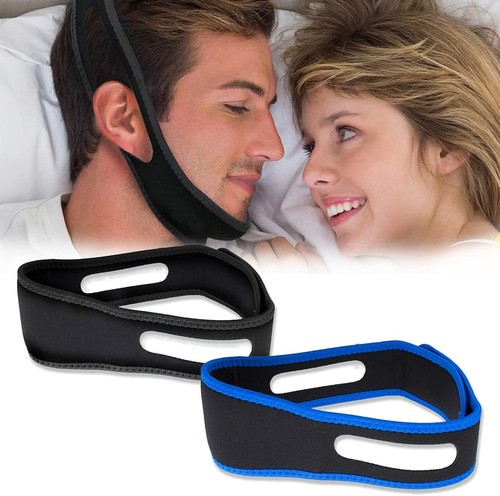
9. Chin straps - the honest verdict
Chin straps keep your mouth closed at night to encourage nasal breathing. Evidence is weak and many people find them uncomfortable. Some find them helpful for mouth-breathing snorers; for most, they’re a low-priority option.
10. Positional sleep aids
Wedges, body pillows and “snore-reducing” pillows encourage side sleeping. A simple wedge pillow can also help acid reflux, which is a common snoring aggravator.
11. Continuous Positive Airway Pressure (CPAP)
If a sleep test confirms obstructive sleep apnoea, CPAP is the gold standard. It’s prescribed, not over-the-counter - but it’s worth pursuing through your GP because untreated OSA carries real cardiovascular risk.
When to see a professional
Book an NHS GP appointment (or private sleep clinic) if you or your partner notice any of:
- Loud, frequent, gasping snoring
- Pauses in breathing during sleep
- Daytime sleepiness or fatigue despite “enough” sleep
- Waking with a headache or dry mouth
- High blood pressure
These can be signs of sleep apnoea, which needs medical assessment - not just a mouthpiece from the internet.
Summary: your quick action plan
- Tonight: sleep on your side, skip the nightcap, and clear your nose.
- This week: try no-alcohol nights and stick to a consistent bedtime.
- If it continues: consider a well-reviewed anti-snoring mouthpiece or consult a pharmacist/dentist.
- If severe/gasping/very tired: see your GP about possible sleep apnoea.
Sources
- NHS - Snoring (what causes it, self-help and medical treatments): https://www.nhs.uk/conditions/snoring/
- NHS - Obstructive sleep apnoea (symptoms and when to seek help for loud, gasping snoring): https://www.nhs.uk/conditions/sleep-apnoea/
- NHS - How to get to sleep (sleep position, bedtime routine, and lifestyle habits): https://www.nhs.uk/live-well/sleep-and-tiredness/how-to-get-to-sleep/
- US National Institutes of Health, NHLBI - Healthy Sleep Habits (sleep schedules, bedroom environment, and managing factors like alcohol and weight): https://www.nhlbi.nih.gov/health/sleep-deprivation/healthy-sleep-habits
This guide is for general information and is not medical advice. If your snoring is accompanied by gasping or daytime exhaustion, see a healthcare professional.